Chapter 4
Writ of Habeas Corpus- a court order demanding that an individual in custody be brought into court and shown the cause for detention. This was in Article 1, Section 9. It prohibited the government from depriving a person of liberty without an open trial before a judge.
Bill of Attainder- A law that declares a person guilty of a crime without a trial. This was prohibited in the original Constitution in Article 1, Section 9.
Ex Post Facto Laws- Prohibited in the original Constitution. A law that declares an action to be illegal after it has been committed.
Due Process- The principle that the government must respect all of a person's legal rights instead of just some or most of those legal rights when the government deprives a person of life, liberty, or property.
Equal Protection- A provision in the 14th Amendment guaranteeing citizens the "equal protection of the laws." This clause has been the basis for the civil rights of African Americans, women, and other groups.
Selective Incorporation- the process by which different protections in the Bill of Rights were incorporated into the 14th Amendment, thus guaranteeing citizens protection from state as well as national governments. Palko established the principle of selective incorporation where the provisions of the Bill of Rights were to be considered one by one and selectively applied as limits on the states through the 14th Amendment.
Necessary and Proper Clause- from Article 1, Section 8 of the Constitution, it provides the Congress with the authority to make all laws "necessary and proper" to carry out its expressed powers.
All of the Supreme Court Cases on the Handout
Amendment 1- SPEECH
- Schenck vs. US (1919)- first time you could define exactly where the freedom boundries for speech are. Court defines where you have these liberties and at what point you no longer do. Was the establishing ground for the Clear and Present Danger rule.
- Gitlow vs. NY (1925)- "Freedoms of speech and press are among the fundamental personal rights protected by the 14th Amendment from abridgement by the states." States cannot say what citizens can or cannot say (for the most part).
- Roth vs. US (1957)- The courts said that basically before things are obscene they are protected. However they never defined obscene. This makes it subjective.
- Miller vs. California (1973)- The courts said that 'hardcore' is obscene, making it then known that there was also a medium and soft-core porn. an important United States Supreme Court case involving what constitutes unprotected obscenity for First Amendment purposes. The decision reiterated that obscenity was not protected by the First Amendment and established the Miller test for determining what constituted obscene material.
- New York vs. Ferber (1982)- "Child porn is not a a category of free speech protected by the Constitution."
- Pope vs. Illinos (1987)- "The social value of a work may be judged from the standpoint of a reasonable person, not only the entire community." This gave the local community a chance to define "obsene".
- Reno vs. ACLU (1997)- Declared the Communication Decency Act of 1996 to be unconstitutional!!! The D. Act of 96 prohibited the transmission of obscene, indecent, and offensive to people under the age of 18.
Amendment 1- Press
- Near vs. Minnesota (1931)- A Minnesota statute allowed a court to shut down anyone "in the business of regularly and customarily producing, publishing....a malicious, scandalous and defamatory newspaper, magazine or other periodical." The Saturday Press was closed under the statute, after it published a series of eight issues claiming that the mayor of Minneapolis and other officials were in the control of a Jewish mobster.
- N.Y. Times vs. Sullivan (1964)- The First Amendment, as applied through the Fourteenth, protected a newspaper from being sued for libel in state court for making false defamatory statements about the official conduct of a public official, because the statements were not made with knowing or reckless disregard for the truth. Supreme Court of Alabama reversed and remanded. N.Y. Times vs. United States (1971)- FCC vs. Pacifica Foundation (1978)- A satiric humorist named George Carlin recorded a 12-minute monologue entitled "Filthy Words" before a live audience in a California theater. He began by referring to his thoughts about "the words you can't say on the public, ah, airwaves, um, the ones you definitely wouldn't say, ever." He proceeded to list those words and repeat them over and over again in a variety of colloquialisms. The transcript of the recording . . . indicates frequent laughter from the audience. At about 2 o'clock in the afternoon on Tuesday, October 30, 1973, a New York radio station, owned by Pacifica Foundation, broadcast the "Filthy Words" monologue. A few weeks later a man, who stated that he had heard the broadcast while driving with his young son, wrote a letter complaining to the Federal Communications Commission (FCC). He stated that, although he could perhaps understand the "record's being sold for private use, I certainly cannot understand the broadcast of same over the air that, supposedly, you control." The commission concluded that certain words depicted sexual and excretory activities in a patently offensive manner, noted that they "were broadcast at a time when children were undoubtedly in the audiences (i.e., in the early afternoon)" and that the prerecorded language, with these offensive words "repeated over and over," was "deliberately broadcast" . . . . In summary, the commission stated: "We therefore hold that the language as broadcast was indecent and prohibited." . . .
- Hudnut vs. American Booksellers Asscociation (1986)- In April 1984, the city of Indianapolis, Indiana, adopted an ordinance defining "pornography" as a practice that discriminates against women. The law banned pornography within the city and permitted women to sue producers, distributors, and/or sellers of pornography for damages and injunctive relief. The American Booksellers Association and numerous other plaintiffs successfully challenged the ordinance in federal district court.
- Hazelwood School District vs. Kuhlmeir (1987)- The high school paper was published as part of a journalism class. The principal at Hazelwood usually reviewed the school paper before it was published, but in this case he deleted two articles the staff had written. One of the deleted articles covered the issue of student pregnancy and included interviews with three students who had become pregnant while attending school. (There was also an article about several students whose mom had been divorced, however their names were not disclosed in the article.) To keep the students' identity secret the staff used pseudonyms instead of the students' names. The principal said he felt the anonymity of the students was not sufficiently protected and that the girls' discussion of their use or non-use of birth control was inappropriate for some of the younger students.
"We uphold the right of high school officials to censor plays, newspapers or anything else that has to do with the student curriculum." The Court held that public school curricular student newspapers that have not been established as forums for student expression are subject to a lower level of First Amendment protection than independent student expression or newspapers established (by policy or practice) as forums for student expression.
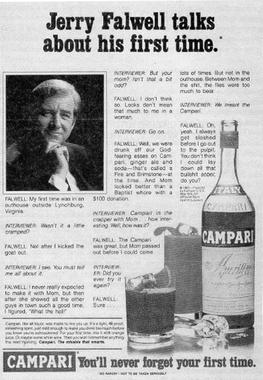
- Hustler Magazine vs. Rev. Jerry Falwell (1988)- "A public figure is not protected against satire, or political cartoons however outrageous or offensive." the United States Supreme Court held, voting 8-0, that the First Amendment's free-speech guarantee prohibits awarding damages to public figures to compensate for emotional distress intentionally inflicted upon them unless they can show that the statements that gave rise to the distress were false and that the person that made those statements knew they were false or acted with reckless disregard for the truth in making the statements. Hustler magazine's parody of Jerry Falwell did not satisfy this standard, and so the Court reversed a jury verdict in favor of Falwell awarding him $250,000 in damages.
Amendment 1- Religion
- West Va. Board of Education vs. Barnette- this was a decision by the Supreme Court of the United States that held that the Free Speech Clause of the First Amendment to the United States Constitution protected students from being forced to salute the American flag and say the Pledge of Allegiance in school. It was a significant court victory won by Jehovah's Witnesses, whose religion forbade them from saluting or pledging to political institutions or symbols. However, the Court did not address the effect the compelled salutation and recital ruling had upon their particular religious beliefs, but instead ruled that the state did not have the power to compel speech in that manner for anyone.
- Engel vs. Vatale- The State Board of Regents, which had supervisory power over New York public schools, had become concerned about an apparent decline in the morality of school students and so began a program of "moral and spiritual training" in the schools. This program included a prayer every morning which the Regents themselves had composed in a nondenominational form.
Arguments were made on April 3rd, 1962. On June 25, 1962, the Supreme Court ruled 7 to 1 that it was unconstitutional for a government agency like a school or government agents like public school employees to require students to recite prayers.
- Lynch vs. Donnelly- The city of Pawtucket, Rhode Island annually displayed Christmas symbols on the property of local non-profit organization: a nativity scene surrounding by symbols of Christmas, including a wishing-well, reindeer, a Christmas Tree, Santa Claus, candy-striped poles, and more. This display had been a tradition in the town for about forty years and was owned and stored by the city government, even though it was actually erected on private property. A group of local citizens filed suit, claiming that a display owned and operated by the government and including religious scenes violated the Establishment Clause because it clearly sponsored religion. With the majority opinion written by Chief Justice Burger, the Court ruled 5-4 that it would be constitutional for the city of Pawtucket to continue displaying a nativity scene with its Christmas display
- Wallace vs. Jaffree- An Alabama law required that each school day begin with a moment of "silent meditation or voluntary prayer". A student's parent sued claiming that the law violated the Establishment Clause by compelling students to pray and exposed students to religious indoctrination. The District Court allowed the practice, but the Court of Appeals found the practice to be unconstitutional.
- Mergens vs. Nebraska-
Amendment 1- Assembly
Slander and Libel- Slander is an oral statement made in "reckless disregard of the truth", which is considered damaging to the victim because it is "malicious, scandalous, and defamatory".
Libel is a written statement made in "reckless disregard of the truth" that is considered damaging to a victim because it is malicious, scandalous and defamatory.
Substantive and Procedural Liberties- Substantive Liberties restrain what the government shall and shall not have the power to do, such as establishing a common religion.
Procedural Liberties are restraints on how the government is supposed to act; for example, citizens are guaranteed the due process of law.
The "Bad Tendency" and "Clear and Present Danger" Tests (same thing)- Test to determine whether speech is protected or unprotected, based on its capacity to present a "clear and present danger" to society.
Article 1:
Section 8-
Section 9-
The Balancing Doctrine-
The Free Exercise Clause- The 1st Amendment clause that protects a citizen's right to believe and practice whatever religion he or she chooses.
The Establishment Clause- the 1st Amendment clause that says that "Congress shall make no law respecting an establishment of religion." This law means that a "wall of separation" exists between church and state.
The Bridget Mergens Case/Decision- Westside School district, located in Nebraska, refused to let a group of students wishing to form a Christian Club within their school. It was decided that the club could not take place because they would not allow a staff member to sponsor it (staff sponsoring was required or the club meetings could not take place at the school). The students argued that the district's decision was in violation of the Equal Access Act requiring that groups seeking to express "religious, political, philosophical, or other content" messages not be denied the ability to form clubs. In an 8-1 decision the Supreme Court held that the club could hold their meetings, however their sponsor could not be paid; this would truly be an endorsement of religion.
The Exclusionary Rule- the ability of courts to exclude evidence obtained in violation of the 4th Amendment.
Rights of the Accused- Legal courtroom rights found in Amendments 4, 5,6,7,8. You can't exclude the Rite of Habeas Corps.
Miranda v. Arizona- 1966 the Supreme Court set forth the Miranda Rule which means that arrested people have the right to remain silent, the right to be informed that anything they say can be held against them and the right to counsel before and during police interrogation.
Griswold v. Connecticut- was a landmark case in which the Supreme Court of the United States ruled that the Constitution protected a right to privacy. The case involved a Connecticut law that prohibited the use of contraceptives. By a vote of 7-2, the Supreme Court invalidated the law on the grounds that it violated the "right to marital privacy". The Supreme Court overturned Griswold's conviction and invalidated the Connecticut law. Although the Bill of Rights does not explicitly mention "privacy", Justice William O. Douglas (writing for the majority) ruled that the right was to be found in the "penumbras" of other constitutional protections.
Jus Soli- birthright citizenship is a right by which nationality or citizenship can be recognized to any individual born in the territory of the related state.
Jus Sanguinis- is a right by which nationality or citizenship can be recognized to any individual born to a parent who is a national or citizen of that state.
Citizenship and the Fourteenth Amendment-
Chapter 5
Equal Protection Clause- 14th Amendment
The "Melting Pot"- America is really diverse, as opposed to other countries such as Japan that has many people that are very similar.
The Conditions and Issues Today Regarding Asian Americans, African Americans and Hispanic Americans- Asians are the fastest growing minority. Hispanics are the largest minority
Religion and Presidential Campaigns-
Gender and Disabled Issues and the Supreme Court-
Now, AIM, NAACP, and NRTLC-
Roe v. Wade- This decision established a woman's right to seek an abortion and prohibited states from making abortion a criminal act. The central holding of Roe v. Wade was that abortions are permissible for any reason a woman chooses, up until the "point at which the fetus becomes 'viable,' that is, potentially able to live outside the mother's uterus, albeit with artificial aid.
Webster v. Reproductive Health Services- 1989- in this case he Court narrowly upheld the constitutionality of restrictions on the use of public medical facilities for abortion.
Gay Rights:
Bowers v. Hardwick- was a United States Supreme Court decision that upheld the constitutionality of a Georgia sodomy law that criminalized oral and anal sex in private between consenting adults.Seventeen years later the Supreme Court directly overruled Bowers in Lawrence v. Texas, 539 U.S. 558 (2003), and held that such laws are unconstitutional. The issue in Bowers involved the right of privacy. Since 1965's Griswold v. Connecticut the Court had held that a right to privacy was implicit in the due process clause of the Fourteenth Amendment to the United States Constitution. In Bowers, the Court held that this right did not extend to private, consensual sexual conduct, at least insofar as it involved homosexual sex.
Romer v. Evans and the Supreme Court- a United States Supreme Court case dealing with civil rights and state laws. The Court gave its ruling on May 20, 1996 against an amendment to the Colorado state constitution that would have prevented any city, town or county in the state from taking any legislative, executive, or judicial action to protect homosexual citizens from discrimination on the basis of their sexual orientation.
Provisions of the Disabilities Act of 1990- The ADA is a wide-ranging civil rights law that prohibits, under certain circumstances, discrimination based on disability. It affords similar protections against discrimination to Americans with disabilities as the Civil Rights Act of 1964, which made discrimination based on race, religion, sex, national origin, and other characteristics illegal. Disability is defined as "a physical or mental impairment that substantially limits a major life activity." The determination of whether any particular condition is considered a disability is made on a case by case basis. Certain specific conditions are excluded as disabilities, such as current substance abusers and transsexuality.
Employment- The ADA states that a covered entity shall not discriminate against a qualified individual with a disability. This applies to job application procedures, hiring, advancement and discharge of employees, worker's compensation, job training, and other terms, conditions, and privileges of employment. Covered entity can refer to an employment agency, labor organization, or joint labor-management committee, and is generally an employer engaged in interstate commerce and having 15 or more workers. Discrimination, among other things, may include limiting or classifying a job applicant or employee in an adverse way, denying employment opportunities to people who truly qualify, or not making reasonable accommodations to the known physical or mental limitations of disabled employees, not advancing employees with disabilities in the business, and/or not providing needed accommodations in training.
Public Service- Title II has two sections. One covers public agencies (local, county, state, etc., government and their units). That section generally requires the agencies to comply with regulations similar to Section 504 of the Rehabilitation Act. These rules cover access to all programs offered by the entity. Access includes physical access described in the Uniform Federal Accessibility Standards or the ADA Standards for Accessible Design and access that might be obstructed by discriminatory policies or procedures of the entity.
Public Accommodations- Under Title III, no individual may be discriminated against on the basis of disability with regards to the full and equal enjoyment of the goods, services, facilities, or accommodations of any place of public accommodation by any person who owns, leases (or leases to), or operates a place of public accommodation. "Public accommodations" include most places of lodging (such as inns and hotels), recreation, transportation, education, and dining, along with stores, care providers, and places of public displays, among other things.
Telecommunications-
Title IV of the ADA amended the landmark 1934 Communications Act by requiring that all of the 1,600 some-odd telecommunications companies in the U.S. take steps to ensure functionally equivalent services for consumers with disabilities, notably those who are deaf or hard of hearing and those with speech impairments.
The Dred Scott- a lawsuit, pivotal in the history of the United States, decided by the United States Supreme Court in 1857 that ruled that people of African descent, whether or not they were slaves, could never be citizens of the United States, and that Congress had no authority to prohibit slavery in federal territories.
States do not have the right to claim an individual's property that was fairly theirs in another state. Property cannot cease to exist as a result of changing jurisdiction. Controversy and broad interpretation holds that the holding was that Africans residing in America, whether slaves or free, could not become United States citizens and the plaintiff therefore lacked the capacity to file a lawsuit. Furthermore, the parts of the Missouri Compromise creating free territories were unconstitutional because Congress had no authority to abolish slavery in federal territories. Judgment of Circuit Court for the District of Missouri reversed and dismissed for lack of jurisdiction.
Plessy- Plessy boarded a car of the East Louisiana Railroad that was designated by whites for use by white patrons only. Although Plessy was one-eighth black and seven-eighths white, under Louisiana state law he was classified as an African-American, and thus required to sit in the "colored" car. When Plessy refused to leave the white car and move to the colored car, he was arrested and jailed. In his case, Homer Adolph Plessy v. The State of Louisiana, Plessy argued that the ELR had denied him his constitutional rights under the Thirteenth and Fourteenth Amendments. However, the judge presiding over his case, John Howard Ferguson, ruled that Louisiana had the right to regulate railroad companies as long as they operated within state boundaries. Plessy sought a writ of prohibition.
Plessy took it to the Supreme Court of Louisiana where he again found an unreceptive ear, as the state Supreme Court upheld Judge Ferguson's ruling. Undaunted, Plessy appealed to the United States Supreme Court in 1896.
The Court rejected Plessy's arguments based on the Thirteenth Amendment, seeing no way in which the Louisiana statute violated it. In addition, the majority of the Court rejected the view that the Louisiana law implied any inferiority of blacks, in violation of the Fourteenth Amendment. Instead, it contended that the law separated the two races as a matter of public policy.
Brown Case- a landmark decision of the United States Supreme Court, which overturned earlier rulings going back to Plessy v. Ferguson in 1896, by declaring that state laws which established separate public schools for black and white students denied black children equal educational opportunities. Handed down on May 17, 1954, the Warren Court's unanimous (9-0) decision stated, in no uncertain terms, that "separate educational facilities are inherently unequal." As a result, de jure racial segregation was ruled a violation of the Equal Protection Clause of the Fourteenth Amendment, this victory thereby paving the way for integration and the Civil Rights Movement.
Strict Scrutiny- Is a test used by the Supreme Court in racial discrimination cases and other cases involving civil liberties and civil rights, which places the burden of proof on the government rather than on the challengers to show that the law in question is constitutional.
Intermediate Scrutiny- A test used by the Supreme Court in gender discrimination cases which places the burden of proof partially on the government and partially on the challengers to show that the law in question is unconstitutional.
The Civil Rights Acts of 1875- was a United States federal law proposed by Republican Senator Charles Sumner and Republican Congressman Benjamin F. Butler in 1870. The act was passed by Congress in February, 1875 and signed by President Grant on March 1, 1875. The Act guaranteed that everyone, regardless of race, color, or previous condition of servitude, was entitled to the same treatment in "public accommodations" (i.e. inns, public conveyances on land or water, theaters, and other places of public amusement).
If found guilty, the lawbreaker could face a penalty anywhere from $500 to $1,000 and/or 30 days to 1 year in prison. However, the law was rarely enforced and in the 1883 Civil Rights Cases the Supreme Court deemed the act unconstitutional on the basis that Congress had no power to regulate the conduct of individuals. The Fourteenth Amendment prohibits discrimination by the state, not individuals.
The law was generally ineffective and not enforced.
Civil Rights Act of 1964- was landmark legislation in the United States that outlawed segregation in the US schools and public places. First conceived to help African Americans, the bill was amended prior to passage to protect women in courts, and explicitly included white people for the first time. It became illegal to compel segregation of the races in schools, housing, or hiring. Powers given to enforce the bill were initially weak, but were supplemented during later years.
The Provisions of the Voting Rights Act of 1965- outlawed the requirement that would-be voters in the United States take literacy tests to qualify to register to vote, and it provided for federal registration of voters in areas that had less than 50% of eligible minority voters registered. The Act also provided for Department of Justice oversight to registration, and the Department's approval for any change in voting law in districts that had used a "device" to limit voting and in which less than 50% of the population was registered to vote in 1964.
Jim Crow Laws, Poll Taxes and White Primaries- were state and local laws enacted in the Southern and border states of the United States and enforced between 1876 and 1965. They mandated "separate but equal" status for black Americans. In reality, this led to treatment and accommodations that were almost always inferior to those provided to white Americans. The Jim Crow period or the Jim Crow era refers to the time during which this practice occurred. The most important laws required that public schools, public places and public transportation, like trains and buses, have separate facilities for whites and blacks.
Defacto and Dejure Segregation- Defacto (looks like fact), Dejure (looks like jury and is based on the law)
Jerry Mandering-
The Bakke Case/ Decision and Affirmative Action- A landmark decision of the Supreme Court of the United States on affirmative action. It bars quota systems in college admissions but affirms the constitutionality of affirmative action programs giving equal access to minorities. Bakke applied to the school in 1973 and 1974 and was denied both times. In 1973 he had a benchmark score of 468 out of 500, but no regular applicants were admitted after him with a score below 470. Bakke, however, was not considered for four special admissions slots which had not yet been filled. Bakke wrote a letter of complaint to Dr. George H. Lowrey, the Associate Dean and Chairman of the Admissions Committee, complaining the special admissions program was not what it claimed to be (a program to help the underprivileged), but a racial and ethnic quota.
In 1974 Bakke again applied to the school and received a score of 549 out of 600. His lowest score of 86 was from Dr. Lowrey, who found Bakke "rather limited in his approach" to the problems of the medical profession, and was disturbed by Bakke's "very definite opinions, which were based more on his personal viewpoints than upon a study of the total problem[.]" In both years that Bakke applied, minority applicants were admitted under the "special admissions" program with GPAs, MCAT scores and benchmark scores significantly lower than Bakke's.
Bakke then filed suit in the Superior Court of California seeking an injunction to allow him into the medical school claiming that the school had discriminated against him on the basis of his race and thus violated his rights under the Equal Protection Clause of the Fourteenth Amendment, the California Constitution, and Title VI of the Civil Rights Act of 1964.
Amendment 1- Congress shall make no law respecting an establishment of religion, or prohibiting the free exercise thereof; or abridging the freedom of speech, or of the press; or the right of the people peaceably to assemble, and to petition the Government for a redress of grievances.
Amendment 4- Security from Unwarrantable Search and Seizure. The right of the people to be secure in their persons, houses, papers, and effects, against unreasonable searches and seizures, shall not be violated, and no Warrants shall issue, but upon probable cause, supported by Oath or affirmation, and particularly describing the place to be searched, and the persons or things to be seized.
Amendment 5- Rights of Accused Persons in Criminal Proceedings- No person shall be held to answer for a capital, or otherwise infamous crime, unless on a presentment or indictment of a Grand Jury, except in cases arising in the land or naval forces, or in the Militia, when in actual service in time of War or public danger; nor shall any person be subject for the same offense to be twice put in jeopardy of life or limb; nor shall be compelled in any criminal case to be a witness against himself, nor be deprived of life, liberty, or property, without due process of law; nor shall private property be taken for public use, without just compensation.
Amendment- 13- Abolition of Slavery
Amendment- 14- Citizenship Rights not to be Abridged by States, Persons Disqualified from Holding Office, What Public Debts are Valid
Amendment- 15- Negro Suffrage- African American males now have the right to vote.
Amendment 19- Female Suffrage
Amendment 24- Anti-Poll Tax. The right of citizens of the United States to vote in any primary or other election for President or Vice President, for electors for President or Vice President, or for Senator or Representative in Congress, shall not be denied or abridged by the United States or any State by reason of people pay poll tax or other tax.
Amendment 26- Eighteen Year Olds can vote.
Chapter 6
Public Opinion- citizens' attitudes about political issues, leaders, institutions, and events.
Political Socialization- The induction of individuals into the political culture; learning the underlying beliefs and values on which the political system is based. Basically, the process by which you acquire your beliefs on government.
Theories of Professors Lane, Mill, and Dahl-
Primary and Secondary Reference Groups- An example of primary reference groups would be schools and family. A secondary reference group could be a labor union, or a club.
The Effects of Class Occupation and Income on Attitudes and Opinions- Obvious. The higher income level you are at, the more able you are to question and deal with authority/government.
Citizen Categories and Party Affiliation (Who are Democrats/Republicans)-
The Reality/Reliability of Political Polling- Polls are snapshots. They were true at one time, but not nessicarily true at the current moment.
Political Beliefs of Americans-
Interest Groups, Political Parties, PACs and Lobbying Basic Functions- PACs or Political Action Committees are basically the funding mechanisms for larger corporations.
Buckley v. Valeo and the Federal Election Campaign Act of 1974- was a case in which the Supreme Court of the United States upheld federal limits on campaign contributions and ruled that spending money to influence elections is a form of constitutionally protected free speech. The court also stated candidates can give unlimited amounts of money to their own campaigns.
The Federal Regulation of Lobbying of 1946-
Chapter 7
Why Citizens Depend on the Media-
What is the Press of Today-
Freedom of the Press and the Constitution-
Yellow Journalism-
Red Lion v. FCC-
Vietnam and the Media-
Deficiencies in News Reporting Today-
The Fairness Doctrine-
The Equal Time Provision-
"Prior Restraint" Issues-
Perceptions of the Press by the U.S. Public Today-
Limits on the Press Today-
Media Bias-